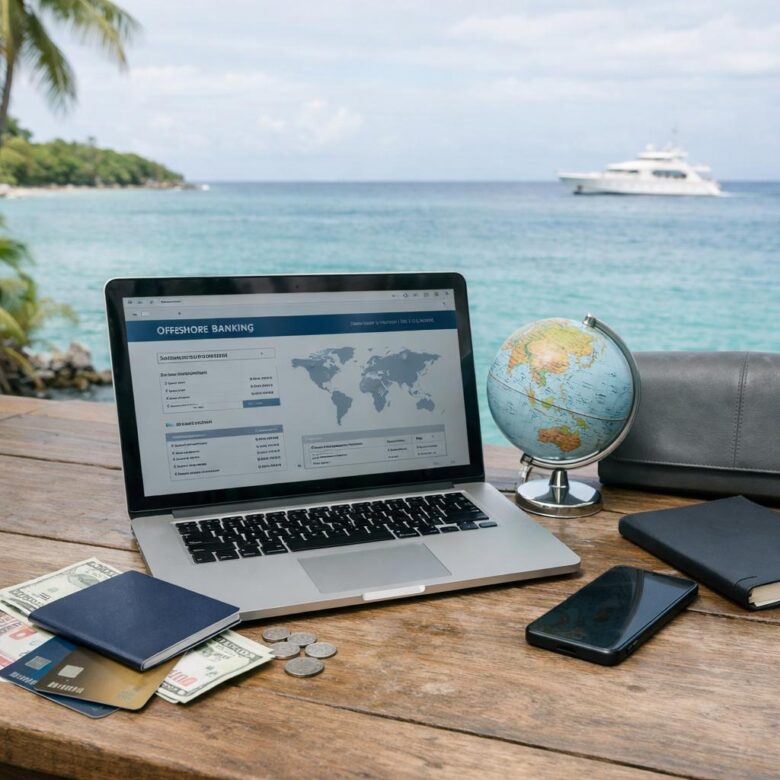
An account outside the owner’s country can make cross-border operations easier, but it does not make business income anonymous or automatically tax-free. There is no universal best offshore account: the strongest option is usually the one that matches the company’s legal structure, operating markets, payment currencies and compliance records while providing dependable access to funds.
What an offshore business account should accomplish
A useful international account should solve a real operating problem. Common examples include receiving client payments in major currencies, paying overseas contractors, connecting to marketplaces, reducing unnecessary currency conversions or maintaining a banking relationship in the company’s main jurisdiction.
Opening an account in a prestigious jurisdiction does not automatically improve a business. The account should support the company’s actual contracts, customers, suppliers and accounting records.
Operating account
Used for regular collections, supplier payments, payroll, subscriptions, cards and other day-to-day activity. Speed, integrations and transparent transaction costs are especially important.
Reserve account
Used to hold working capital or retained cash that is not needed immediately. Regulatory strength, legal ownership, withdrawal access and protection arrangements become more important.
Bank accounts versus financial platforms
A polished application and local account details do not necessarily mean the provider is a bank. Legal status affects how customer funds are held, what protection may apply and which financial services the provider can offer.
| Account type | Common strengths | Important limitations | Possible use |
|---|---|---|---|
| Licensed commercial bank | Deposit accounts, established banking infrastructure and possible access to credit or treasury services | Slower onboarding, higher requirements and potentially less competitive international pricing | Core banking, reserves, payroll and local operations |
| Electronic money or payment institution | Multi-currency balances, digital onboarding and efficient cross-border transfers | Funds may be safeguarded rather than covered by a bank deposit scheme | Collections, conversion and supplier payments |
| Financial technology platform using partner banks | Modern interface, payment automation, cards and accounting integrations | The platform may not itself be the bank holding the deposit | Digital companies and technology-focused operations |
| Local collection account | Allows customers to pay through familiar domestic payment rails | May have restrictions on balances, industries, incoming payments or withdrawal destinations | Reducing international payment friction |
Established options remote business owners can investigate
The following services address different international payment needs. They are not presented as a universal ranking or endorsement, and availability depends on the company’s incorporation, operating address, industry, owners and countries involved. Products, fees and eligibility rules can change, so confirm current terms on each provider’s official site.
Wise Business
Wise Business supports international payments, currency conversion and collections through available local and international account details. Wise operates through regulated entities, and money held in a standard Wise account is generally safeguarded rather than treated as a conventional bank deposit. The applicable entity and protections vary by country and product.
- Useful for receiving and converting supported currencies
- Local account details are available for certain currencies and regions
- Pricing and features vary by company location
- Not a replacement for every traditional banking function
Airwallex
Airwallex offers Global Accounts with local receiving details in supported markets, multi-currency balances, international payments and expense-management features. Eligibility, payment rails and customer-fund arrangements depend on the Airwallex entity and region serving the business.
- Designed for cross-border companies and online businesses
- Local collection details in supported countries
- Payment, card and expense tools may be combined
- Licensing and fund-protection arrangements vary by region
Revolut Business
Revolut Business provides multi-currency balances, international payments and team spending controls in supported markets. Depending on the region and contractual entity, a business may receive services from a bank, an electronic money institution or another regulated entity, with different protection arrangements.
- Hold, exchange, send and receive supported currencies
- Team cards, permissions and spending controls
- Eligibility depends on the company’s registration and location
- The serving legal entity and protection model should be checked
Mercury
Mercury is a financial technology company, not a bank, and offers business banking services through partner banks. Its published eligibility rules generally require the applicant company to be formed and registered in the United States or a U.S. territory. Founders do not necessarily need to be U.S. citizens or residents.
- Relevant to eligible U.S.-registered remote companies
- Online banking, payments and team controls
- Existing or planned U.S. operations are required
- Company address, owners, industry and source of funds are reviewed
A licensed bank in the company’s main jurisdiction
A traditional account where the company is incorporated or substantially operates can provide a clearer connection between banking, tax, payroll and legal records. It may also be easier to explain during audits, financing applications or compliance reviews.
- Useful for taxes, payroll and retained operating cash
- May provide local deposit protection for eligible balances
- Can require physical presence or stronger local substance
- Fees and international transfers may be less competitive
A backup account with a separate provider
A second approved account can reduce dependence on one login, card network or compliance team. It should be a genuine business account with complete accounting records—not an undisclosed route around provider restrictions.
- Can support business continuity during account reviews
- May separate collections from reserve funds
- Requires additional reconciliation and access controls
- Must be disclosed wherever tax or reporting rules require it
How to choose the best account for your business
- Identify the legal account owner The account should normally be opened in the exact legal name of the company receiving the income. Confirm the incorporation number, registered name and any trading names.
- Map where money comes from List the countries, currencies, payment processors, marketplaces and client types expected to send funds.
- Map where money goes Record contractor countries, supplier currencies, payroll obligations, taxes, card spending and expected owner distributions.
- Confirm provider eligibility Check the company jurisdiction, business address, owner residence, industry restrictions and required level of local activity.
- Verify regulatory status Identify the legal provider, licensing authority, customer-fund model and any deposit protection that applies.
- Compare the full cost Include monthly fees, receiving charges, transfer fees, exchange-rate margins, card costs and intermediary-bank deductions.
- Review operational controls Check user permissions, payment approvals, multi-factor authentication, card limits, accounting integrations and statement exports.
- Prepare for ongoing reviews Banks and platforms may request updated ownership records, invoices, contracts, tax details or explanations of unusual transactions.
Build a clean application file
Financial institutions need to understand who owns the company, what it does, why it needs the account and how funds are expected to move. A complete and consistent file can make the business easier to assess, although it does not guarantee approval.
- Certificate of incorporation or formation document
- Current articles, bylaws or operating agreement
- Shareholder and beneficial-owner information
- Government identification for relevant owners and directors
- Registered and principal business addresses
- Tax identification numbers and tax-residency details
- Company website and professional email address
- Client contracts, invoices or marketplace statements
- Supplier and contractor agreements
- Source-of-funds and source-of-wealth explanations
- Expected monthly transaction amounts and currencies
- Previous business bank statements when available
- Licences or registrations for regulated activities
- Clear explanation of the company’s remote operating model
Tax transparency, CRS, FATCA and U.S. reporting
Holding a business account abroad does not by itself remove corporate tax, personal tax, accounting or reporting obligations. The relevant requirements depend on the company, its owners, their tax residence, the account’s legal location and the jurisdictions involved.
Under the Common Reporting Standard, participating jurisdictions require financial institutions to collect specified financial-account and tax-residency information. Reportable information may then be exchanged annually with relevant partner jurisdictions. Financial institutions may request tax-residency declarations and tax identification numbers from the company and its controlling persons.
FATCA separately creates reporting and withholding rules involving foreign financial institutions, certain foreign entities and U.S. account holders or owners. U.S.-connected businesses and owners should obtain advice specific to their structure rather than assuming that a company account falls outside all personal or entity-level reporting rules.
| Compliance concept | What it generally concerns | What the business should prepare |
|---|---|---|
| Customer due diligence | Identity, ownership, business activity and purpose of the account | Complete company and owner documentation |
| Beneficial ownership | The natural persons who ultimately own or control the company | Accurate ownership charts and current registers |
| Source of funds | Where a specific payment or account balance originated | Invoices, contracts, sale records and bank statements |
| Source of wealth | How an owner accumulated substantial overall assets | Business-sale records, earnings, investments or inheritance evidence |
| CRS classification | Tax residence and reporting status of entities and controlling persons | Accurate self-certifications and tax identification numbers |
| FATCA status | U.S.-connected account holders, owners, entities and financial institutions | Applicable U.S. tax forms and professional advice |
| FBAR and Form 8938 | Separate U.S. reporting regimes for qualifying foreign accounts and assets | Account-location records, maximum annual values and filing analysis |
| Sanctions screening | Restricted countries, people, companies and transactions | Clear counterparties, invoices and payment purposes |
Compare costs beyond the monthly fee
An account advertised as free may still be expensive when the business regularly converts currencies, receives international wires or makes many supplier payments.
Check domestic transfers, SWIFT payments, correspondent-bank deductions and marketplace payout charges.
Compare the exchange rate used, provider margin, timing fees, volume tiers and weekend pricing where applicable.
Review local payments, international wires, batch transfers, urgent transfers and beneficiary fees.
Include physical cards, virtual cards, foreign spending, cash withdrawals and replacement charges.
Consider subscription plans, user seats, approval workflows, accounting integrations and support levels.
An inexpensive account can become costly when payments are frequently held or require difficult manual reviews.
Deposit protection and provider concentration
If a company intends to hold a substantial balance, it should understand who legally holds the money and what could happen if the provider, a safeguarding bank or an underlying partner institution failed.
Under European Union rules, deposit guarantee schemes generally protect eligible deposits at covered banks up to €100,000 per depositor per bank. This does not mean every balance at every financial platform is automatically protected. Coverage can depend on the depositor, product, legal entity, account structure and applicable exclusions.
- Identify the licensed entity named in the account agreement
- Confirm whether the balance is a bank deposit or safeguarded money
- Check the applicable national protection scheme
- Verify whether the specific business entity and product are eligible
- Understand how multiple accounts at one banking group are treated
- Check whether a sweep program uses several partner banks
- Keep emergency access with another approved provider
- Review balances after large client payments or funding rounds
Common offshore banking mistakes
Foreign accounts may be subject to tax reporting, information exchange and beneficial-ownership checks.
Personal expenses, owner distributions and company payments should be recorded and separated properly.
Client payments should not be routed through an unrelated company merely because it obtained easier banking access.
A country may sound prestigious while offering poor payment access or requiring local substance the company cannot provide.
Hiding affiliate, cryptocurrency, financial, gaming or marketplace activity can lead to payment holds or account closure.
Brand names can operate through different licences and protection arrangements in different countries.
Technical outages, fraud reviews or account restrictions can interrupt access to operating cash.
Nominee shareholders or directors do not remove beneficial-owner disclosure and can increase documentation requirements.
Expired passports, old addresses and inaccurate ownership records can delay routine account reviews.
Multiple rushed applications can create inconsistent statements about activity, turnover and expected payment flows.
A practical account structure for a remote company
The following is an organizational example rather than a universal recommendation. The correct structure depends on the company’s jurisdiction, taxes, clients and operational needs.
| Account role | Typical purpose | Main selection priority |
|---|---|---|
| Primary operating account | Expenses, payroll, taxes and local obligations | Reliability and connection to the company’s jurisdiction |
| International collection account | Receiving USD, EUR, GBP or other client currencies | Local payment details and transparent conversion |
| Reserve account | Holding cash not immediately needed for operations | Legal protection, access and institutional strength |
| Backup payment account | Business continuity during outages or reviews | Independent access through a separate provider |
| Payment processor balance | Marketplace or card-payment settlement | Prompt transfer to an approved company account |
Final account-selection checklist
- The account is in the correct company name
- The company jurisdiction is eligible
- All beneficial owners can be documented
- The business activity is accepted
- Expected client countries are supported
- Required currencies can be received and held
- Payment processors can settle to the account
- Supplier countries and payment rails are supported
- Foreign exchange pricing has been tested
- Monthly and transaction fees are understood
- The exact regulated entity is identified
- Deposit protection or safeguarding is understood
- The account’s legal location is known
- Tax-residency forms can be completed accurately
- Accounting statements are exportable
- Multiple users can have controlled access
- A backup payment method is available
- Emergency support procedures are known
- Closure and withdrawal terms have been reviewed
Frequently asked questions
Is it legal to open an offshore business account?
It can be lawful for a business to hold accounts in other countries, but the answer depends on the laws affecting the company, its owners and the account jurisdiction. Tax, accounting, exchange-control, sanctions, licensing and reporting obligations may apply.
Does an offshore account make business income tax-free?
No. The location of the account alone does not determine where company profits or owner income are taxed. Tax results depend on the company structure, management, business activity, owner residence and applicable law.
Can a remote founder open a foreign account without visiting a branch?
Some providers support digital onboarding, but approval depends on the company, owners, business address, industry and available documentation. A provider may still request an interview, certified documents or additional verification.
Are Wise, Airwallex, Revolut Business and Mercury banks?
Their structures differ and can vary by region. Wise and Airwallex generally provide regulated payment services rather than conventional banking through every serving entity. Revolut may provide business services through a bank, electronic money institution or another entity depending on the market. Mercury is a fintech company that provides banking services through partner banks. Always check the current account agreement for the exact entity serving the business.
Which country is best for an offshore business account?
There is no universal best country. A suitable jurisdiction normally has a clear connection to the company’s incorporation, clients, suppliers, currency needs or genuine operations.
Why did the provider request invoices and contracts?
Financial institutions use customer due diligence to understand the business relationship, expected activity and origin of funds. Contracts and invoices help connect account transactions to documented commercial activity.
Can I use my personal account for company payments?
Mixing company and personal money can create accounting, legal and compliance problems, and personal-account terms may prohibit business use. Use an account that supports the relevant business entity and record owner payments appropriately.
Will the account be reported under CRS?
Reporting depends on the jurisdictions, financial institution, account-holder classification, tax residence and controlling persons. Complete all tax self-certifications accurately and seek qualified advice when classification is unclear.
Does a U.S. business have to report a foreign account?
It may. U.S. entities can be subject to FBAR reporting, and separate tax-return disclosures may also apply. The result depends on the account’s location, maximum value, legal owner and who has authority over it. A qualified U.S. tax professional can assess the specific filing requirements.
Should a business keep all its money in a fintech account?
The decision depends on the provider’s legal structure, protection model, operational reliability and the amount held. Businesses should understand concentration risk and consider whether separate operating and reserve arrangements are appropriate.
Final perspective
The best international account is not the one located farthest from the owner or marketed with the most currencies. It is the account that can support the company’s real business activity while keeping ownership, taxes, payment flows and records clear.
Remote business owners should compare providers by regulatory status, eligibility, payment access, total cost, accounting compatibility and fund protection. A fast approval is useful only when the account remains suitable during routine compliance reviews and business growth.
Official sources and further reading
- OECD — Consolidated Text of the Common Reporting Standard
- Internal Revenue Service — Foreign Account Tax Compliance Act
- Internal Revenue Service — Report of Foreign Bank and Financial Accounts
- Financial Action Task Force — Guidance on Beneficial Ownership of Legal Persons
- European Commission — Deposit Guarantee Schemes
- UK Financial Conduct Authority — Safeguarding Requirements for Payment and Electronic Money Institutions
- Wise — Official Business Account Information
- Wise — How Wise Keeps Customer Money Safe
- Airwallex — Global Accounts
- Airwallex — Customer-Fund Protection by Jurisdiction
- Revolut Business — Multi-Currency Accounts
- Revolut Business — Eligible Countries and Territories
- Mercury — Business Account Eligibility and Requirements

Lasarga Editorial Team researches and reviews educational content on international personal finance, cross-border property, expatriate tax topics, global mobility and executive travel. The team prioritizes primary sources, clear limitations and practical explanations for an international audience.